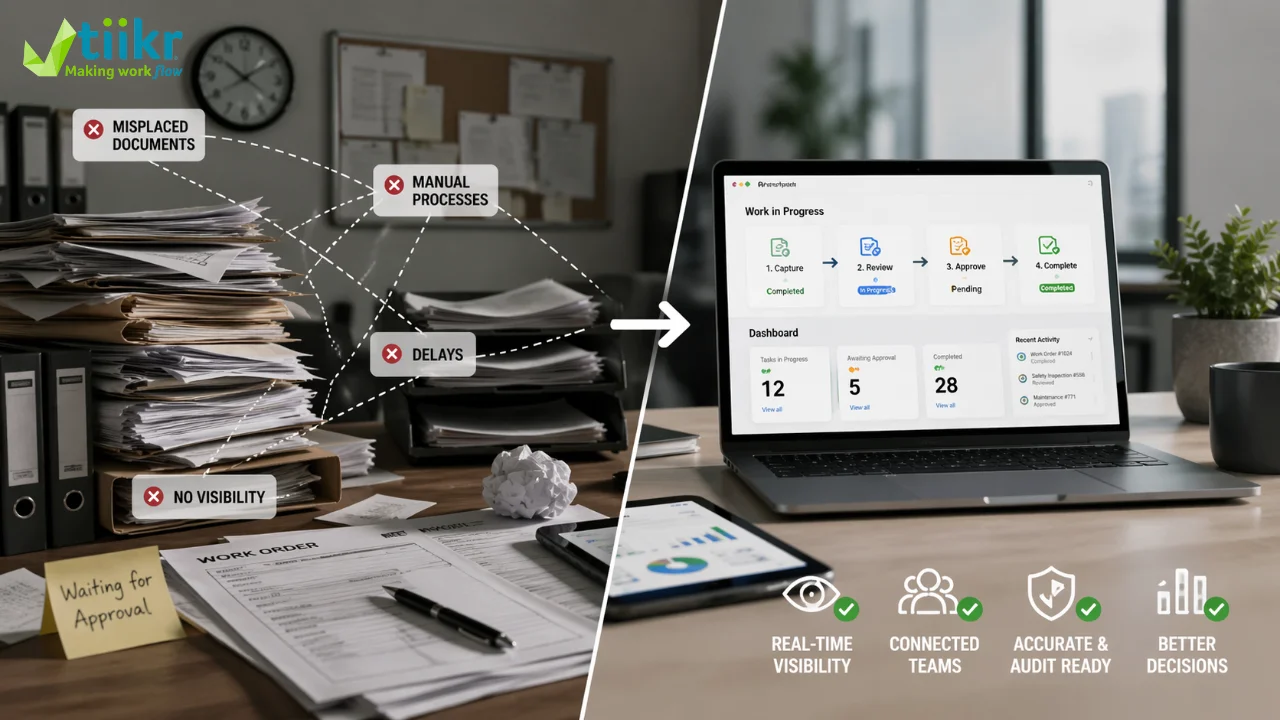
Many businesses still rely on a mix of paper forms, PDFs, spreadsheets, and emails to manage operational work.
While these tools may seem familiar, they often create hidden inefficiencies.
Work gets done, but the record of it is:
- incomplete
- delayed
difficult to track
Where Things Break Down
Common issues include:
- paperwork completed after the job instead of during it
- missing or inconsistent data
- delays in approvals
- lack of visibility across teams
- difficulty reconstructing what happened
These problems are rarely caused by people. They are caused by how information is captured and managed.
The Impact on Operations
Over time, these gaps lead to:
- reactive compliance
- quality issues surfacing too late
- increased administrative overhead
- reduced confidence in reporting
Moving to Digital Workflows
Replacing paper with digital forms is a first step, but it is not enough on its own.
The real improvement comes from connecting those forms into structured workflows that guide work from start to finish.
How Tiikr Helps
Tiikr replaces paper and disconnected tools with a structured workflow system.
It allows teams to:
- capture work as it happens
- move tasks through defined steps
- maintain visibility across the process
- produce a complete, audit-ready record
Learn more about how Tiikr works here: What Is Tiikr?