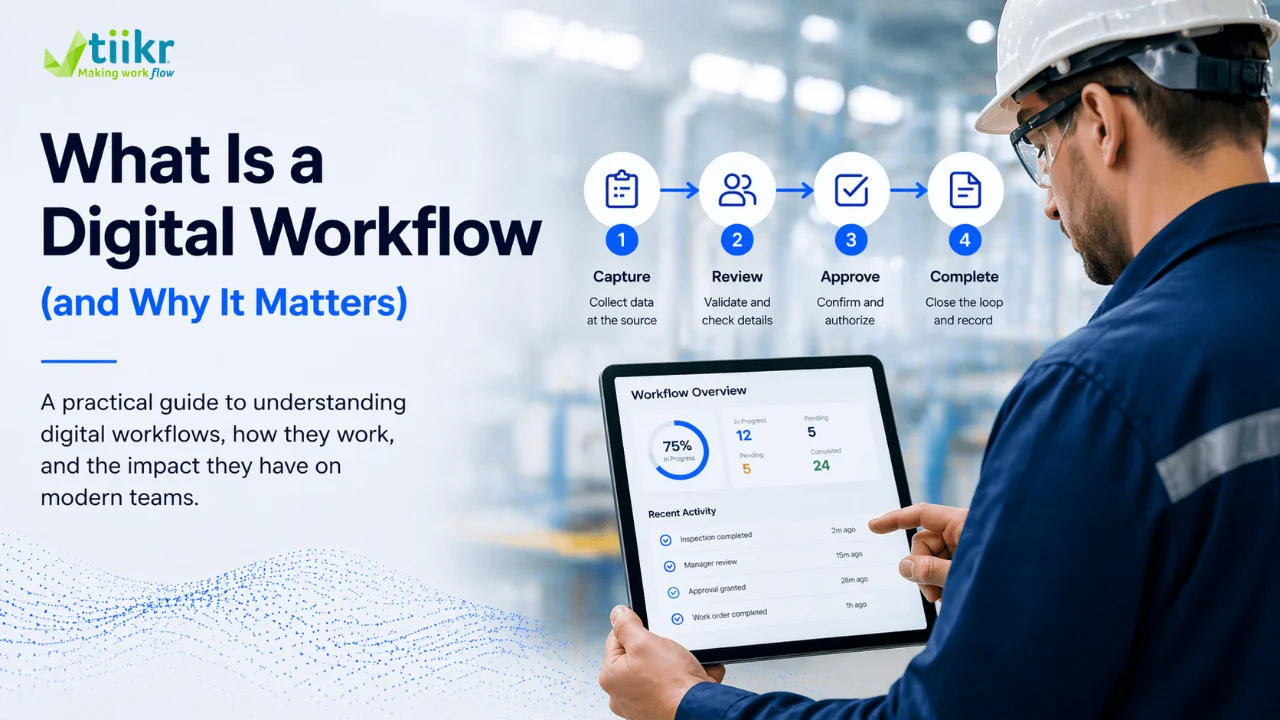
A digital workflow is a structured way of guiding work from one step to the next using software, rather than relying on paper, emails, or disconnected tools.
Instead of tasks being passed informally between people, a digital workflow defines how work moves, who is responsible at each stage, and what information needs to be captured along the way.
Why Digital Workflows Matter
In many businesses, work is completed but not clearly tracked.
Information is often:
- recorded after the fact
- stored in multiple systems
- dependent on individual habits
This leads to delays, missed approvals, and gaps in accountability.
A digital workflow helps solve this by making each step visible and structured as it happens.
How a Digital Workflow Works
A typical workflow includes:
- defined steps (inspection, review, approval, completion)
- assigned responsibility at each stage
- structured data capture
- progression rules between steps
As work moves forward, each step contributes to a complete record of the process.
Common Use Cases
Digital workflows are used across many areas, including:
- inspections and quality checks
- compliance and audit processes
- service and maintenance workflows
- delivery and handover processes
Where Tiikr Fits
Tiikr is a digital forms and workflow platform designed to support these processes in real time.
It allows businesses to capture work as it happens, guide it through structured steps, and produce a complete record at the end.
Learn more in our overview: What Is Tiikr?