Stop Forcing Compliance. Start Demonstrating Capability
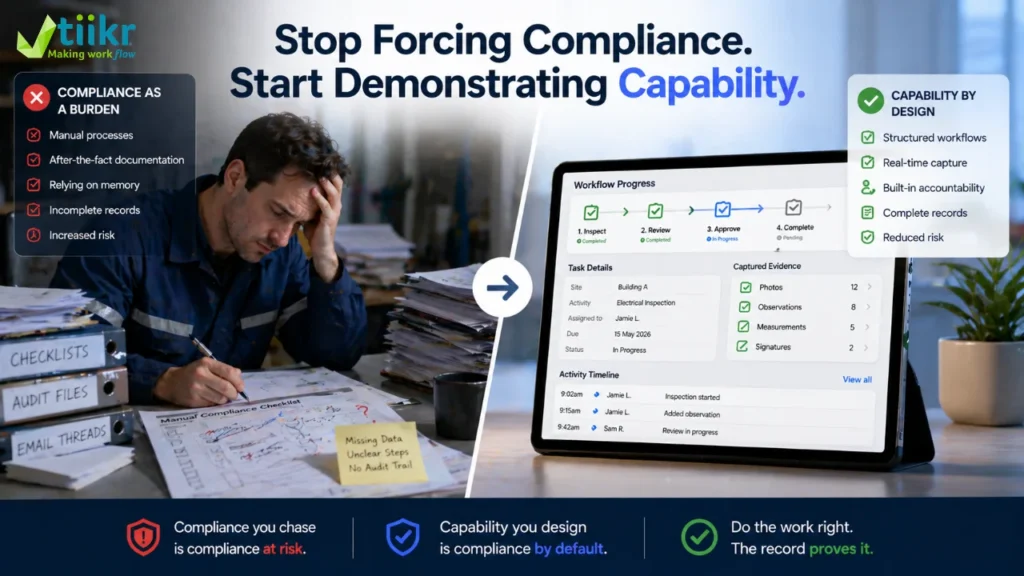
Compliance often fails when it relies on memory, manual processes, and after-the-fact documentation. This article explains why shifting from compliance to capability creates more consistent, visible, and reliable outcomes.
What Does It Mean to Capture Work After the Fact?
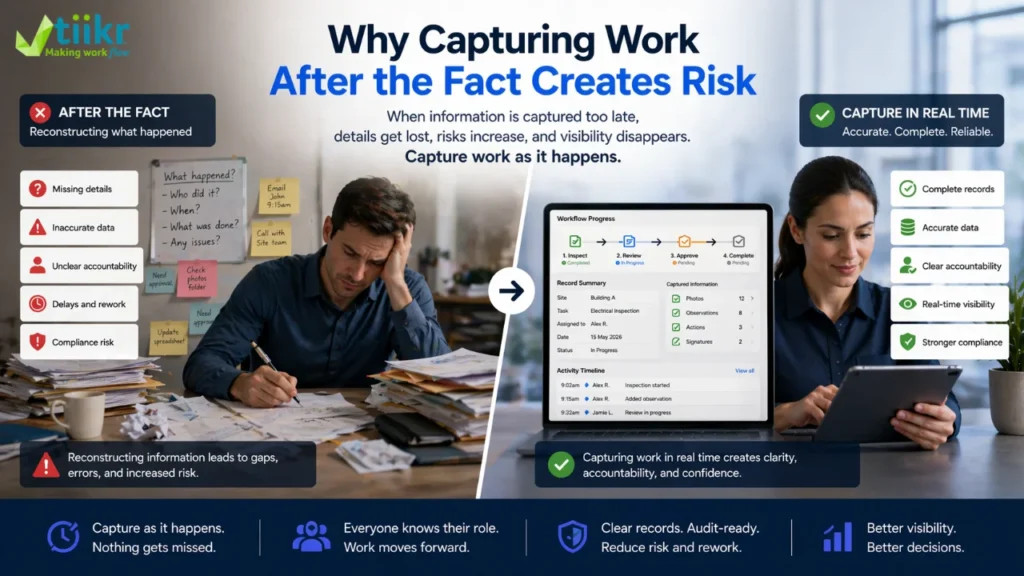
Capturing work after the fact often leads to missing details, unclear accountability, and increased risk. This article explains why delayed documentation creates problems and how capturing work in real time improves visibility and accuracy.
What Does It Mean That Work Happens Outside Your System?
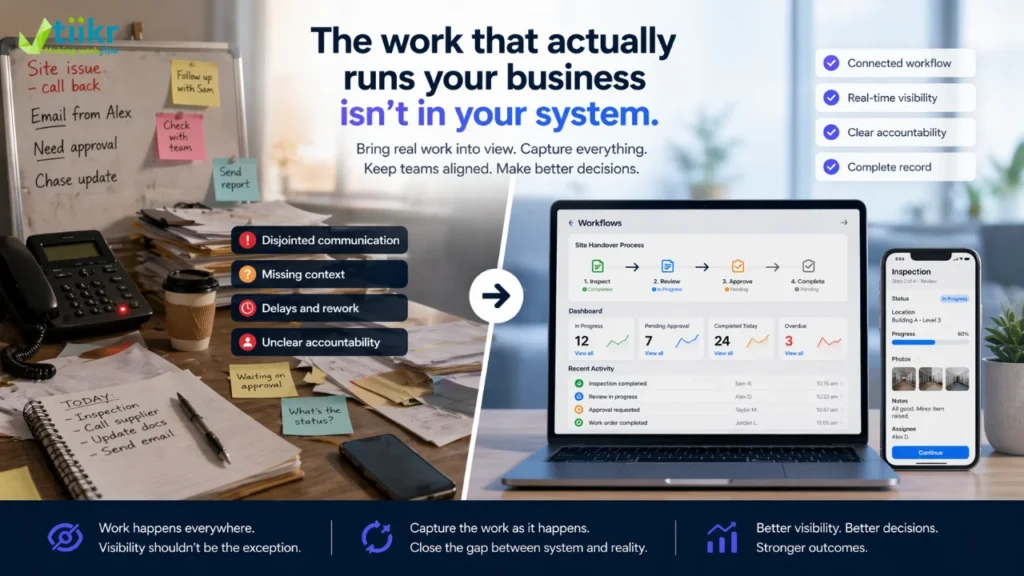
Much of the work that actually runs a business happens outside formal systems. This creates gaps in visibility, accountability, and consistency. This article explains where off-system work occurs and how structured workflows help bring it back into view.
What Is the Real Problem with Operational Visibility?
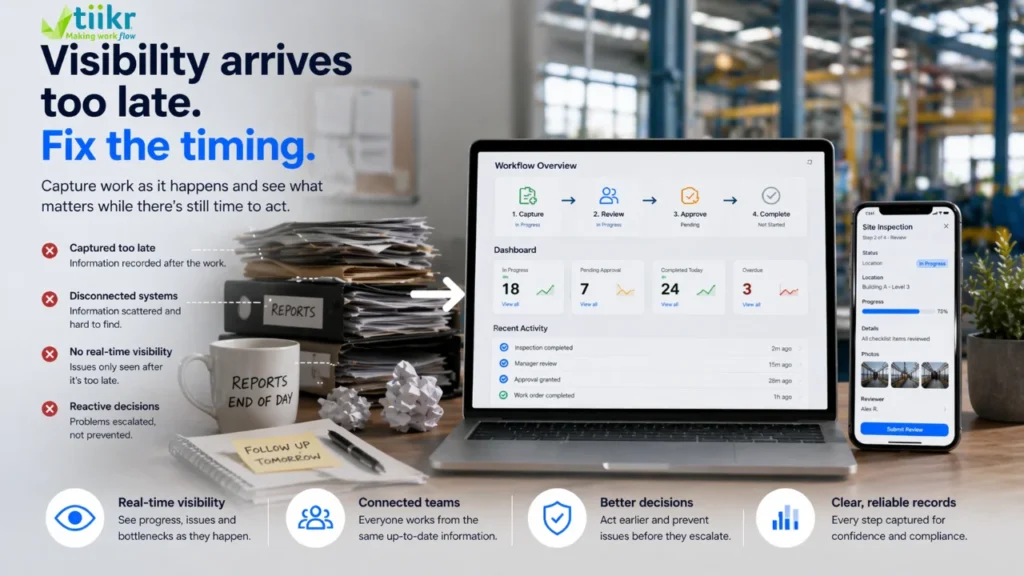
Excerpt, Lorem ipsum dolor sit amet, consectetuer adipiscing elit. Aenean commodo ligula eget dolor. Aenean massa.
What Is an Audit-Ready Record?
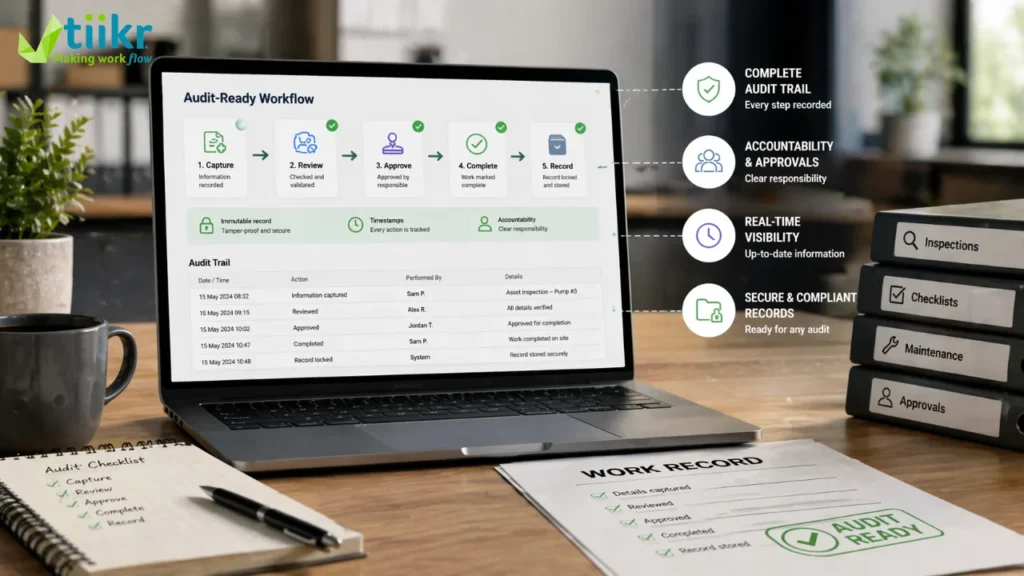
An audit-ready workflow captures work clearly at every step, creating a complete and reliable record. Learn how structured workflows improve accountability, visibility, and reporting.
The Problem With Paper and Disconnected Systems
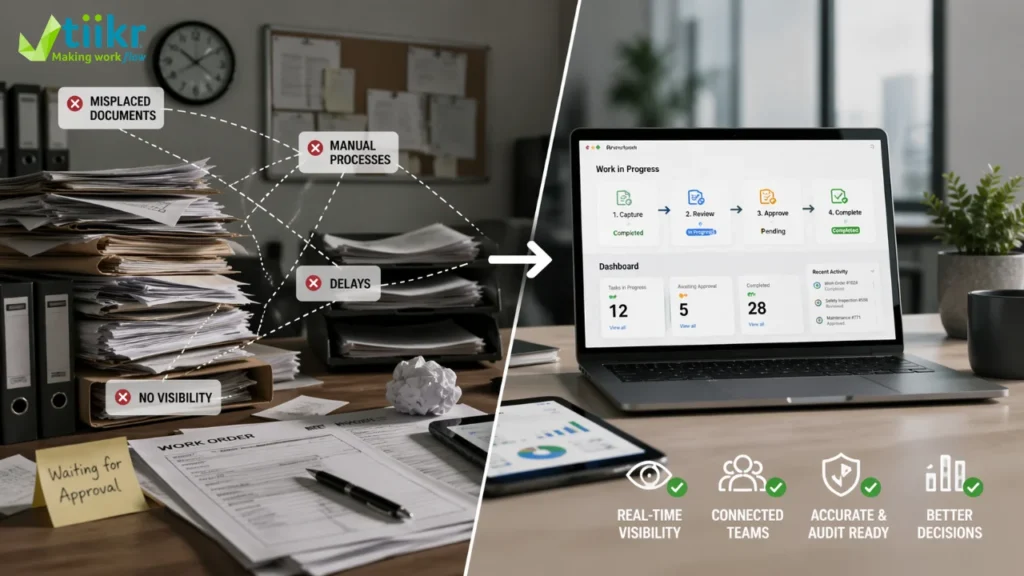
Paper forms and disconnected systems often create delays, missing information, and poor visibility across teams. This article explains why these problems persist and how digital workflows help create a clearer, more reliable way to manage work.
What Is a Digital Workflow? (and Why It Matters)
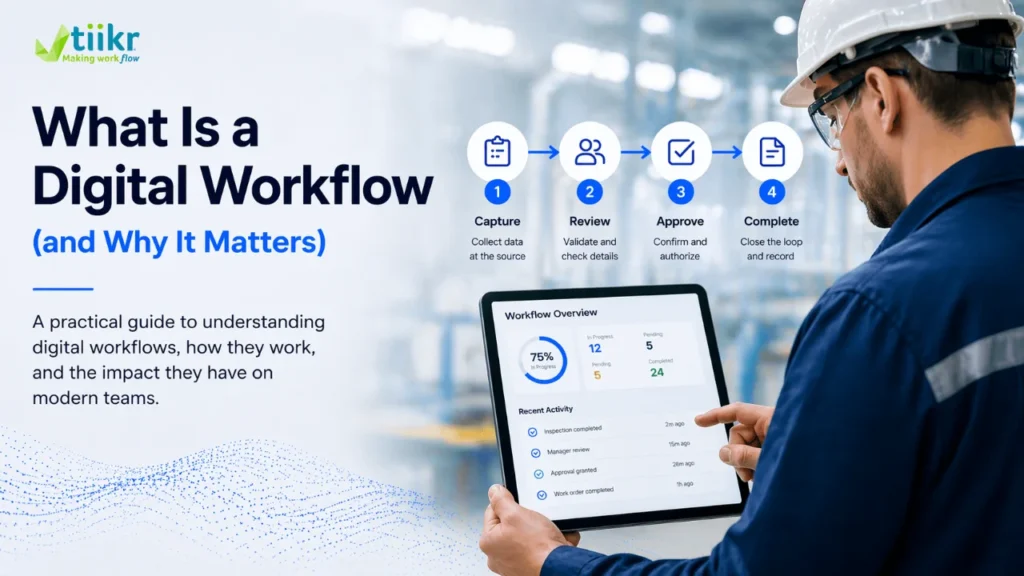
A digital workflow is a structured way of managing work across teams using connected systems instead of paper or disconnected tools. This guide explains how digital workflows work and why they are critical for improving visibility, accountability, and operational efficiency.
What Is Tiikr?
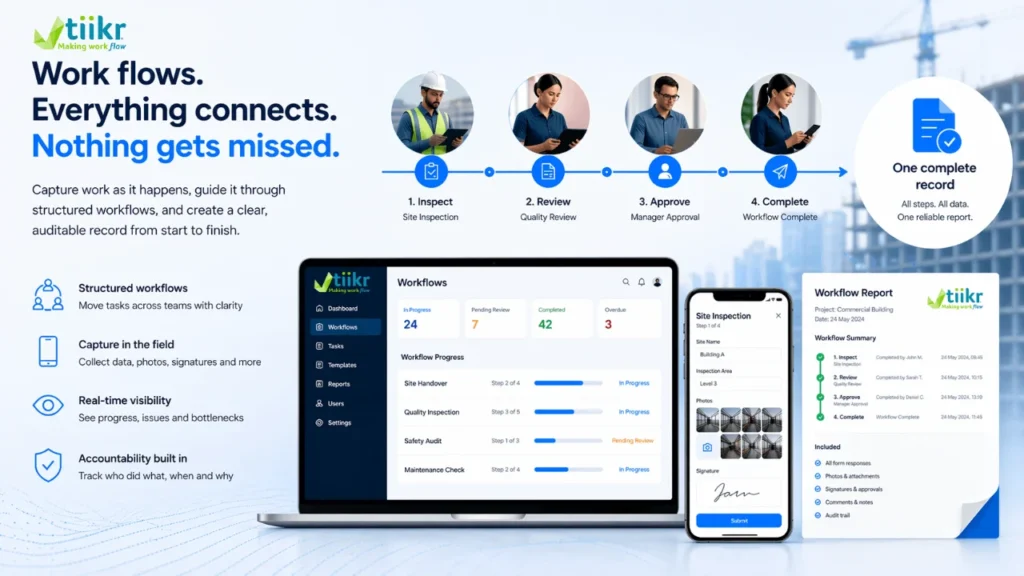
Tiikr is a digital forms and workflow platform that helps businesses capture work as it happens, guide processes across teams, and create clear, audit-ready records from start to finish.