From Reception to Billing: Closing the Gaps in the AoB Handover
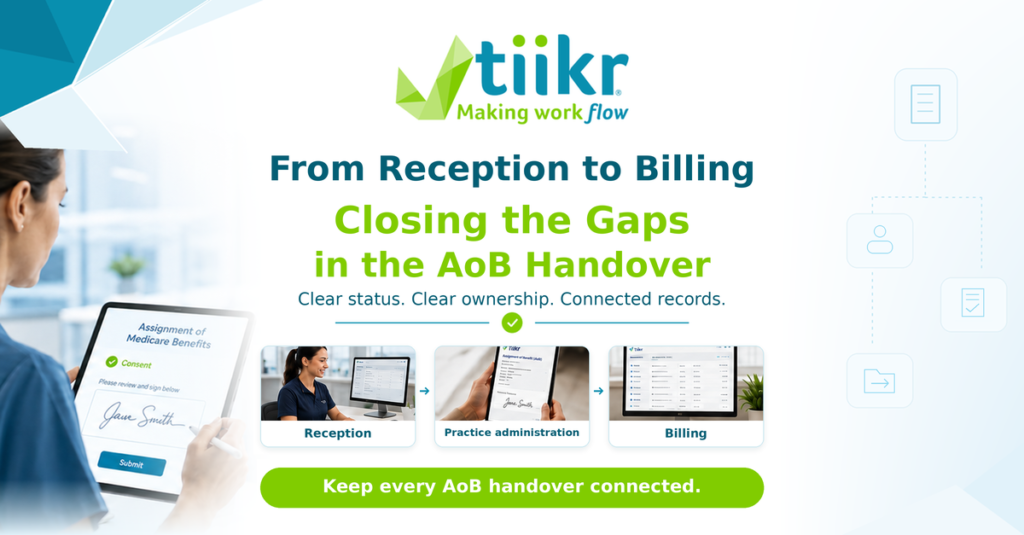
An AoB agreement can pass through several hands before a Medicare claim is submitted. Learn how clear ownership, meaningful status updates and coordinated follow-up can help practices and MSOs reduce chasing and keep work moving.
Consistent AoB Across Every Practice: A Practical Guide for Medical Groups and MSOs
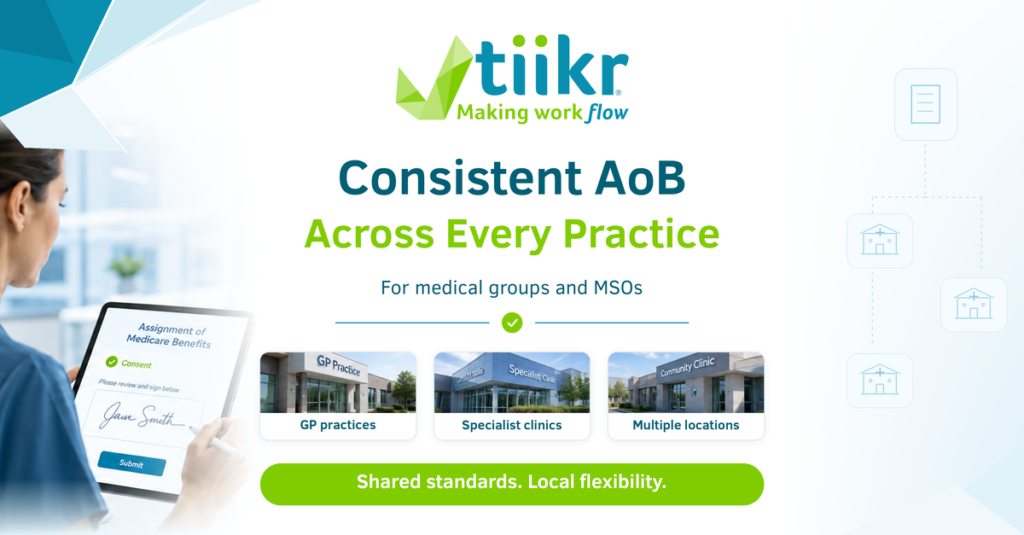
Managing Medicare Assignment of Benefit across several practices takes coordination. Discover how a shared approach to templates, responsibilities, training and records can support local teams and make group operations easier to manage.
Find Every Medicare Assignment of Benefit (AoB) Record Fast
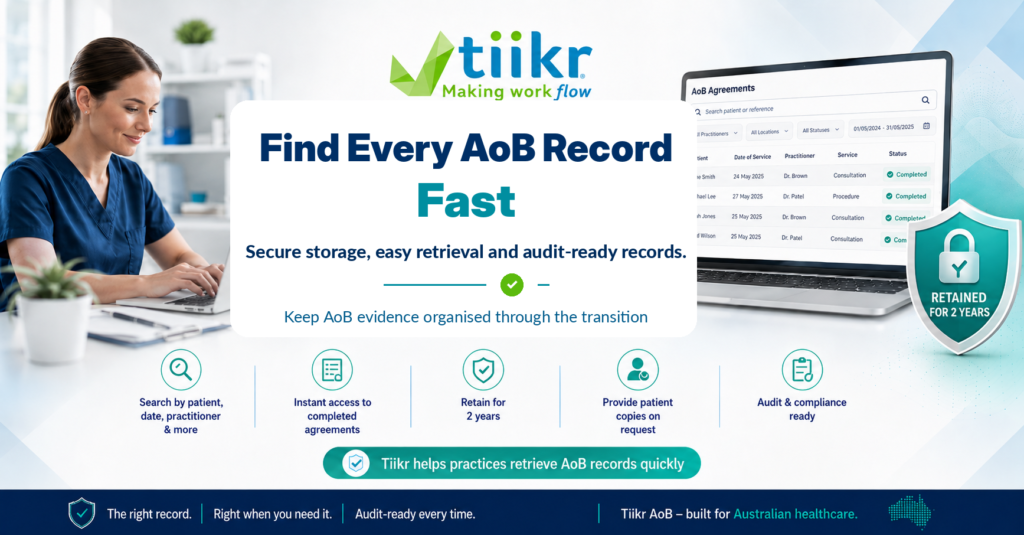
Medicare Assignment of Benefit changes are now in effect. Learn why GP and specialist practices should use the transition period to prepare structured digital AoB workflows.
Medicare AoB Workflows That Fit the Way Your Practice Actually Works
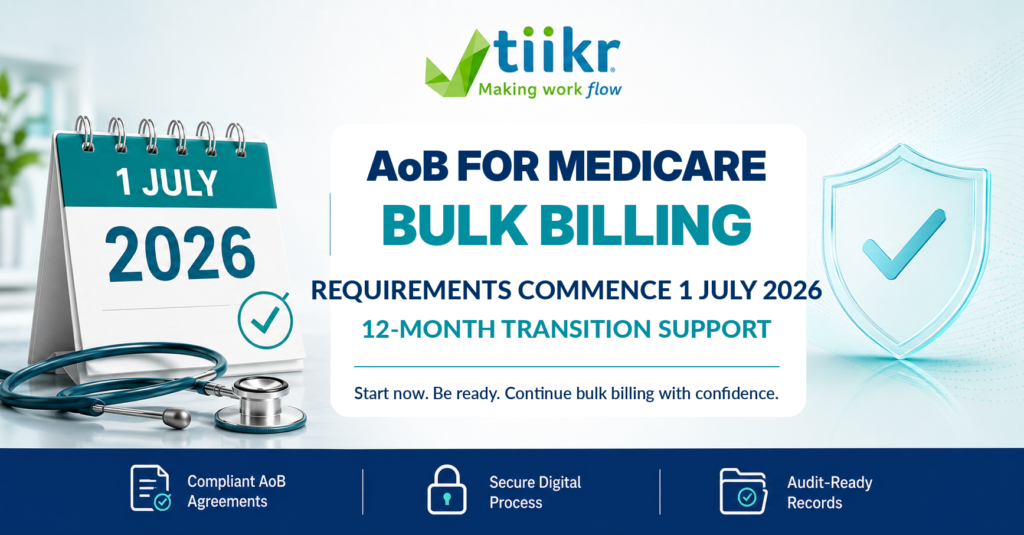
Medicare Assignment of Benefit changes are now in effect. Learn why GP and specialist practices should use the transition period to prepare structured digital AoB workflows.
What Does It Mean to Capture Work After the Fact?
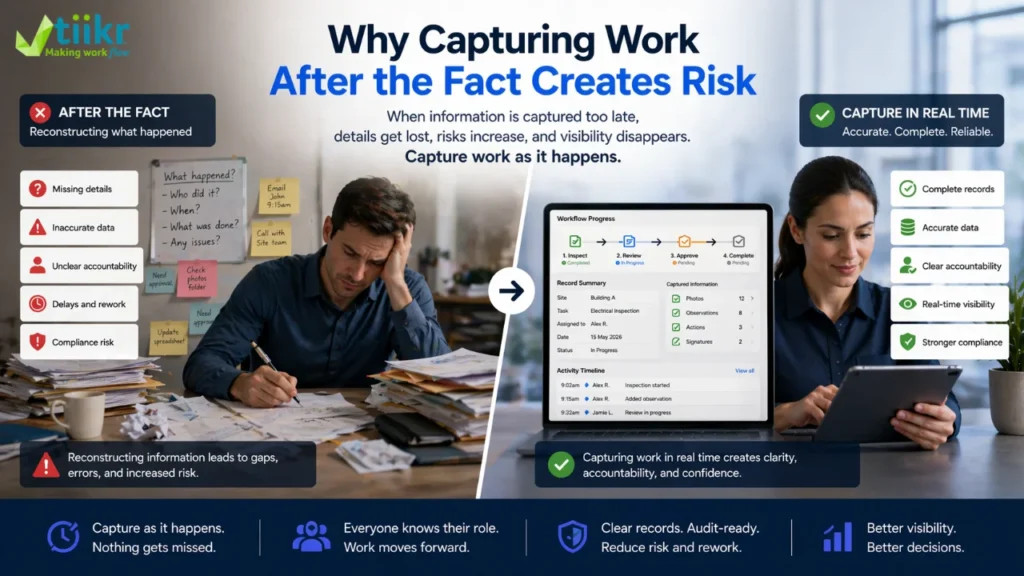
Capturing work after the fact often leads to missing details, unclear accountability, and increased risk. This article explains why delayed documentation creates problems and how capturing work in real time improves visibility and accuracy.
What Does It Mean That Work Happens Outside Your System?
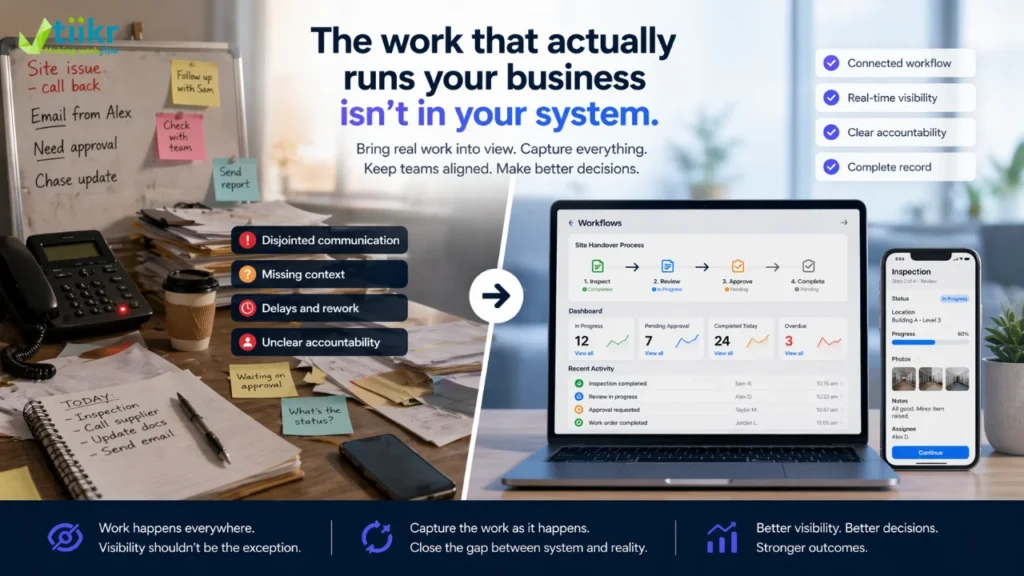
Much of the work that actually runs a business happens outside formal systems. This creates gaps in visibility, accountability, and consistency. This article explains where off-system work occurs and how structured workflows help bring it back into view.
What Is the Real Problem with Operational Visibility?
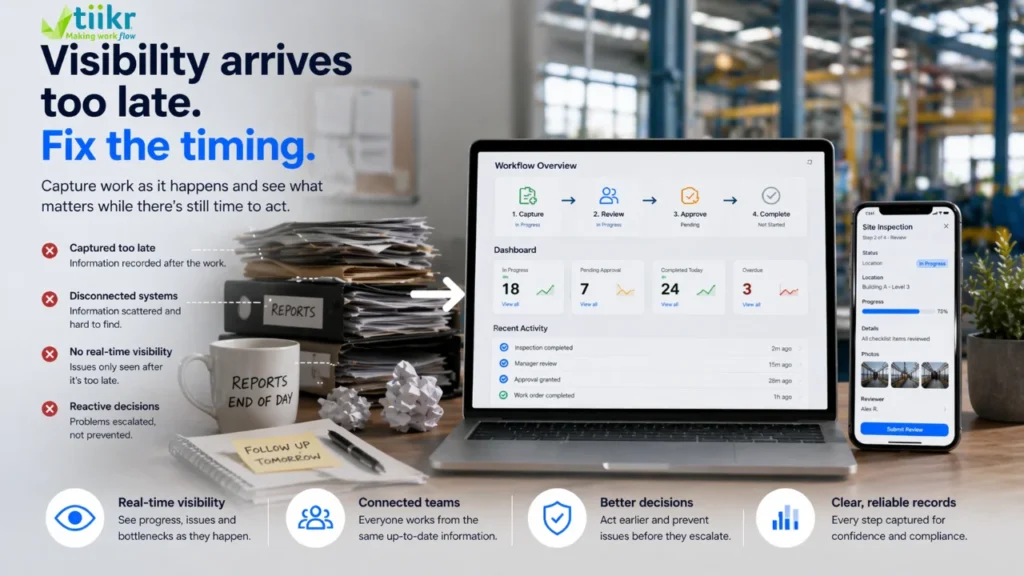
Operational visibility problems are rarely caused by missing data. More often, information simply becomes visible too late to influence decisions. This article explains why that happens and how structured workflows improve real-time awareness.
The Problem With Paper and Disconnected Systems
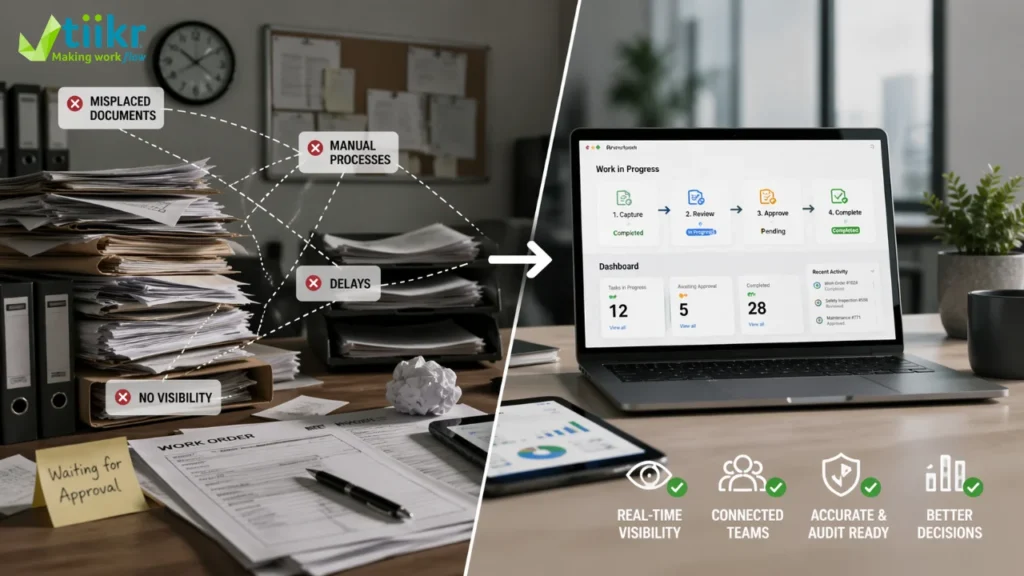
Paper forms and disconnected systems often create delays, missing information, and poor visibility across teams. This article explains why these problems persist and how digital workflows help create a clearer, more reliable way to manage work.